Most of Ottawa sits on clay, and clay packs down.
Most of Ottawa sits on heavy clay, and clay compacts under feet, dogs, mowers, and time. Core aeration opens the root zone back up so water, air, and nutrients can actually reach the roots. It is a straightforward service, recommended when your lawn needs it — and not when it doesn't.
How core aeration opens compacted soil.
Opens the root zone
A core aerator pulls thousands of soil plugs, leaving open channels straight through the compacted layer. The first thing those channels restore is air. Roots need to breathe — they take up oxygen and give off carbon dioxide — and in packed clay neither gas moves freely. Open the soil and the exchange starts again: oxygen reaches the roots, and stale carbon dioxide can escape. Water and nutrients follow the same channels instead of sitting on the surface. That is why this matters most on the heavy clay under most Ottawa lawns.
Lets roots grow deeper
Roots go where there is room and where there is air. Compacted ground offers neither. Give them open, well-aerated soil and they head down instead of sideways. That depth is what helps a lawn survive a July heat wave and a January freeze.
Feeds the soil back to itself
The cores stay where they fall and break down over a few weeks, returning soil and living microbes to the surface. Those microbes digest thatch, and they do it aerobically — so the air you just let into the soil is also what puts them to work. No raking is needed. The cores disappearing is simply the treatment finishing its job.
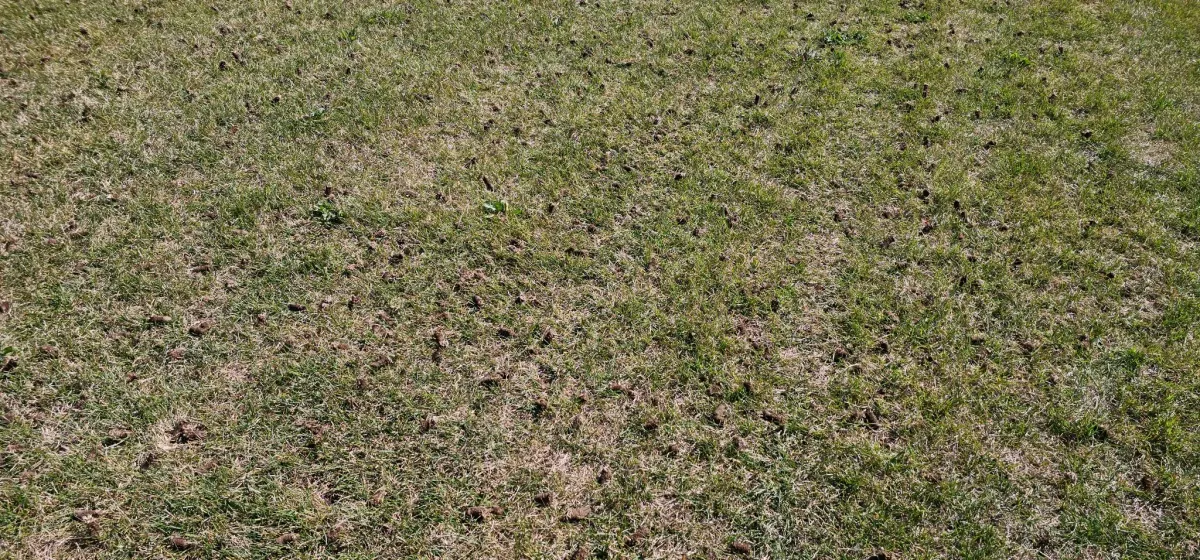
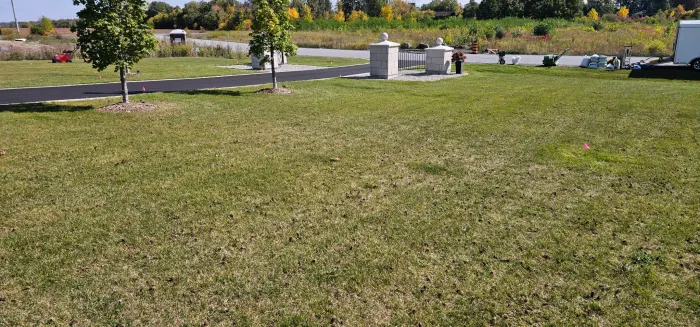
The signs are on the surface.
- Water pools or runs off instead of soaking in after rain
- High-traffic paths — play areas, dog runs, shortcuts — going thin or bare
- Soil feels hard underfoot even days after watering
- Grass thinning while weeds that love compacted ground move in
- A spongy thatch layer building up faster than it breaks down
- A lawn on heavy clay that has never been aerated
Two or more of these and aeration is probably worth pricing. None of them? Then you likely do not need it this season.
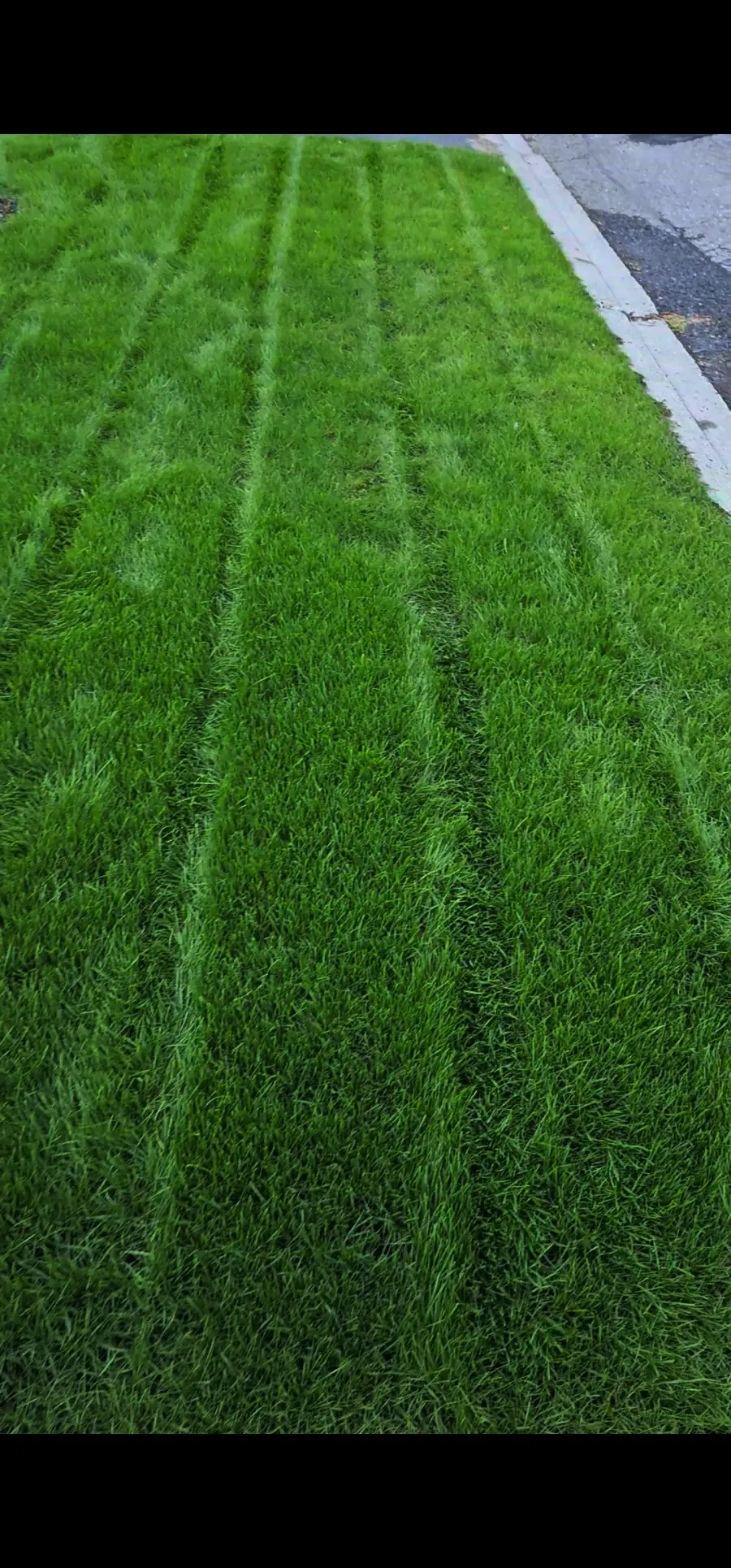
Aeration works alone. It works harder in a program.
On its own, core aeration is the single most cost-effective thing you can do for a compacted lawn. But the open channels it leaves are also the delivery route for everything else — which is why it anchors our soil and seeding programs.
Revive — Soil Health →
The aerator is already on your lawn — Revive uses the visit fully: pH tested and corrected, organic compost topdressing, and the aeration itself. The open channels carry the compost and amendments straight into the root zone, so each treatment multiplies the others. Often the grass recovers without seeding.
Repair — Precision Seeding →
If the lawn also needs density, the AeraSeeder does both jobs in one: opening the soil and placing seed into it mechanically — real seed-to-soil contact, never broadcast over compaction.
Organic Maintenance →
Maintenance clients add spring or fall core aeration to the four-visit program — the feeding schedule works noticeably harder in soil that can actually absorb it.
Common questions.
Does every lawn need aeration every year?
No — and we'll tell you if yours doesn't. Lawns on heavy clay or with real foot traffic usually benefit annually; a sandy, lightly-used lawn may not need it nearly as often. Compaction is something we check on arrival — not something we assume.
What happens to the plugs left on the lawn?
Leave them. The cores break down over a few weeks — rain and mowing work them back in, returning soil and microbes to the surface where they help digest thatch. Raking them up throws away part of the benefit.
Does aerating spread lawn disease from one property to another?
No. The cores stay on the lawn they came out of. A tine pulls the plug and drops it beside the hole it just made — that is the entire distance any soil travels. Nothing is collected and carried down the street. The machine is emptied before it leaves your property, so it arrives at your lawn the same way it leaves: clear of anyone else's soil. It is a fair question to ask. Moving soil around is exactly how you would spread a problem if you were careless about it.
Aeration or dethatching — which one do I need?
They fix different problems: aeration relieves compacted soil, dethatching removes a matted layer of dead material above it. Some lawns need one, some both, some neither — we confirm which on arrival, before you pay for anything. Aeration itself also speeds thatch breakdown, so borderline thatch often doesn't need a separate treatment.
When's the best time to aerate in Ottawa?
Spring or fall, when the soil is moist and the grass is actively growing — recovery is fastest and the machine pulls proper cores instead of shattering dry ground. We schedule around your soil, not the calendar week.
What does it cost?
Core aeration is priced by lawn size — the online estimator gives you a range for your property in about 60 seconds, no email required. It can stand alone or be combined with other services in the same visit.
One-off Core Aeration — typical prices
$160 +HST flat. The $160 minimum visit charge covers a one-off aeration on lawns up to about 5,000 sq ft — the trip is the real cost, not the number of cores.
Starting prices, +HST — your exact number comes from your postal code and measured lawn in the estimator, in about 60 seconds.