One visit a year. Surfaces that stay restored.
Restoration and sealing are investments. The Annual Maintenance & Warranty program is how they keep paying off: a professional wash, a joint-by-joint inspection, and a written condition report every year.
What happens when we come back.
Recommended by the manufacturers of the products we install, and priced as maintenance rather than another project.
OxyShock MAX wash
A professional oxygen-based clean of the pavers and joints — the right chemistry and water temperature for restored and sealed surfaces alike. Never harsh chlorine washes, which damage a sealed finish.
Joint inspection & touch-ups
Every joint line is checked for erosion, settlement, or early weed pressure. Minor touch-ups are done on the spot and colour-matched to the existing sand. Anything larger is priced with you before it is done.
Condition report
Photos and clear notes: what's performing, what to watch, and whether anything needs attention before it becomes a real repair. If nothing needs attention, the report says so.
Warranty check-in
The visit documents your surface year over year — which is what keeps warranty coverage meaningful.
As a guide: around $385 +HST for a typical patio or walkway · program members save 10–15% · exact price confirmed on site.
Two coverages, stated plainly.
Joint warranty — 3 years, or 5 with the program
Every qualifying restoration carries a 3-year warranty on the joint work itself — Natural Finish or CAT5-sealed, the same terms. Keep the yearly visit in this program and that coverage runs to 5 years. Qualifying areas are surfaces assessed as level or properly levelled; sunken or pooling areas are flagged (and excluded unless corrected) before work starts.
CAT5 finish — cared for and tracked
A CAT5 finish needs the right care — oxygen-based cleaning, no chlorine, no extreme heat — and the annual visit is precisely that care, documented. It's also how we track when your finish will genuinely need renewal (typically 3–5 winters).
What a warranty on this work can honestly cover.
A mechanic who rebuilds your brakes warrants the brakes. He does not warrant the whole car — not the rust, not the road, not the winter. That is the same shape as this.
We work on top of a base that was built when your interlock was first laid, often decades ago, usually by someone else, and always out of sight until we open it. Under that sits ground that freezes and thaws every Ottawa winter, tree roots that move, water that has to go somewhere, and salt that arrives whether anyone wants it or not. None of that is ours, and no honest contractor would claim to warrant it.
What we stand behind is our own work: joints extracted properly rather than skimmed, materials installed the way the manufacturer specifies rather than the quickest way, compaction done with the right plate and pad, and sealer applied only over cured, verified joints — or not at all. That is the part we control, so that is the part we warrant. Where the ground beneath is the real problem, we say so at the assessment instead of trying to warrant our way around it.
How the warranty conditions work
Missing a year doesn't automatically void your coverage. But a warranty on outdoor stonework is only as good as the maintenance behind it, so the maintenance is built into the program. What's covered and what isn't is documented before your job starts, and re-documented at every visit.
Small problems, caught small.
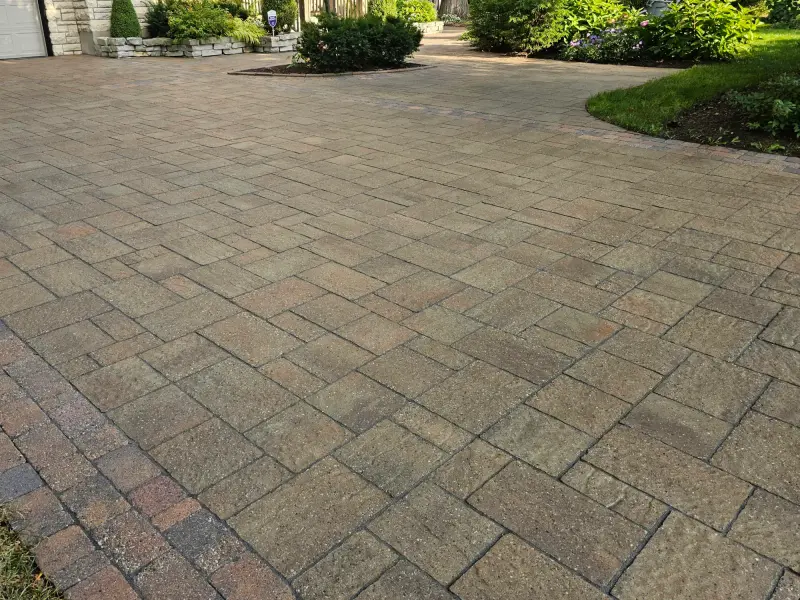
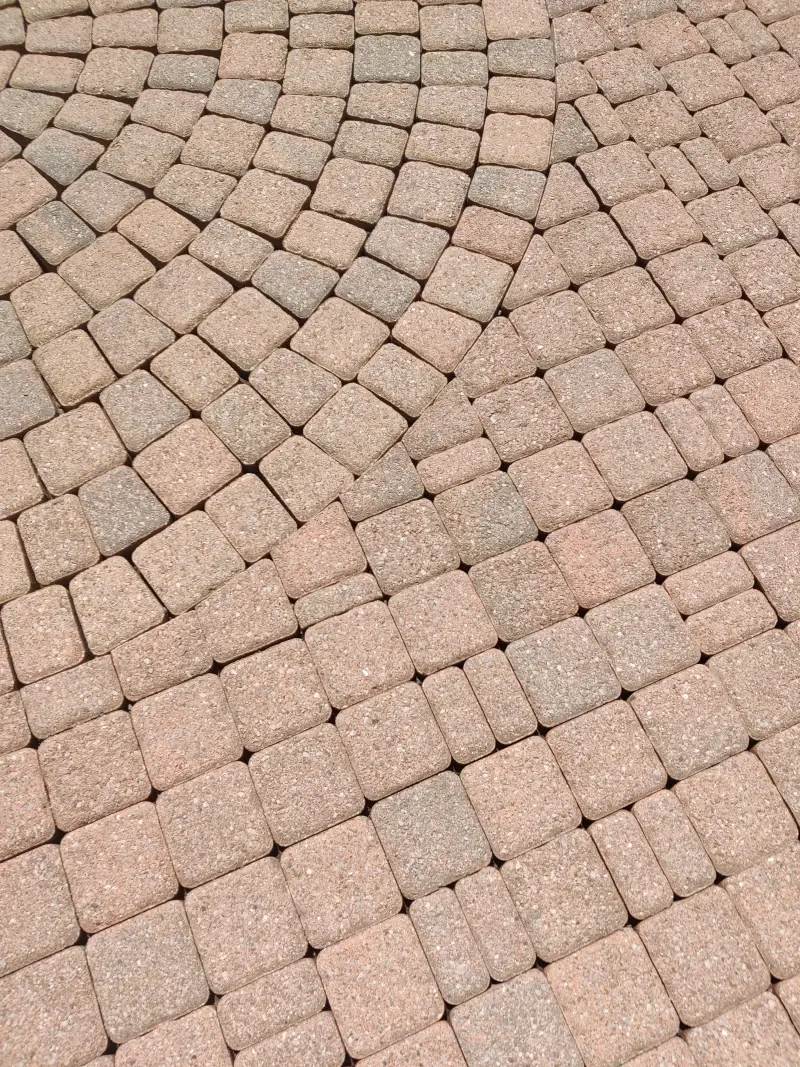
Ottawa surfaces live hard: freeze-thaw movement, road salt, organic growth, joint erosion. None of it is dramatic in year one — all of it is expensive by year five if nobody's looking. One professional visit a year keeps the surface clean, the joints locked, and the finish protected, for a fraction of what any single repair costs.
Put the visit next to what it looks after:
- A typical patio (~400 sq ft) would cost about $16,000 to lay new today.
- A typical walkway (~150 sq ft): about $7,500.
- A typical driveway (~800 sq ft): about $28,000.
The yearly visit — around $385 for a typical patio or walkway — is only a few percent of what that surface would cost to replace as new work. That is the whole argument. Interlock is one of the most valuable things in your yard, and it is the one that quietly loses its joints if nobody looks at it once a year.
Common questions.
If I skip a year, is my warranty void?
No — missing a visit doesn't automatically void coverage. But the annual visit is what keeps sealed-surface coverage in force.
Can I just wash the interlock myself?
Gentle washing between visits is great. What we bring is the right chemistry (an oxygen-based cleaner — never chlorine, which damages a CAT5 finish), controlled water temperature, and a trained eye on the joints. The wash is half the visit; the inspection is the other half.
What does the visit cost?
It scales with the size of your interlock. As a guide, a typical patio or walkway runs around $385 +HST; larger surfaces more. Program members save 10–15%, and your exact price is confirmed on site.
When does the visit happen?
During the field season, April through October — typically scheduled in the same window each year so the surface gets consistent care. We'll propose the timing; you confirm it.
What about stains or efflorescence?
Rust and oil stain removal and efflorescence treatment are available as add-ons during the same visit — you'll get a straight recommendation on whether they're worth doing, and a price before any work happens.
Does CAT5 need re-doing eventually?
A sealed finish protects for 3–5 winters depending on exposure. The annual visit tracks how yours is wearing, and when renewal time comes it's a clean and recoat — not a rebuild. We'll tell you when it's actually due, not before.