Fix the soil, and the lawn often fixes itself.
For lawns that are tired, thinning, or slow to recover — but still have enough grass left to work with. We rebuild the foundation with organic compost topdressing, core aeration, and pH correction matched to what your soil actually needs.
Three treatments, one foundation.
Organic compost topdressing with seaweed
Weed-free pelletized compost made from leaf compost, seaweed (Ascophyllum nodosum) and humic acid — no animal by-products, manure, or sewage. It builds organic matter, improves water retention, and supports the soil biology your grass feeds on. Safe for family and pets.
Core aeration
Ottawa clay compacts easily. Core aeration opens the root zone so air, water, nutrients — and the compost — can reach the roots instead of sitting on the surface. Aeration and topdressing together achieve more than either does on its own.
pH testing & remediation
Soil pH measured in multiple spots, then corrected with the right amendment for how far out of range it is. If your pH doesn't need correcting, we don't apply a corrective — you get extra compost instead.
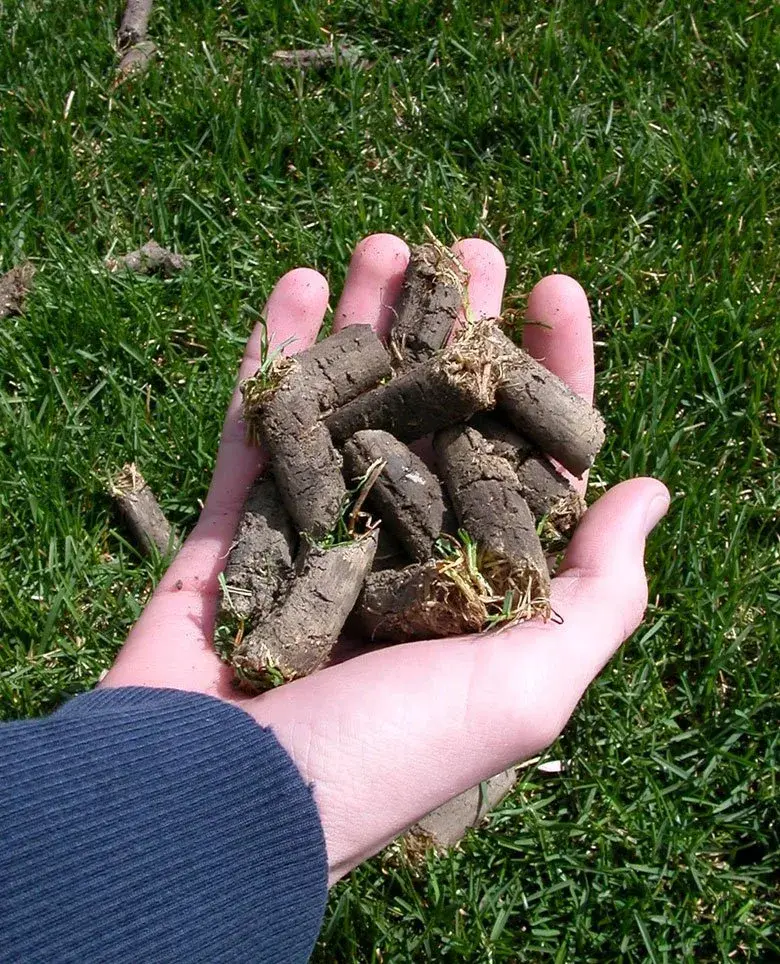
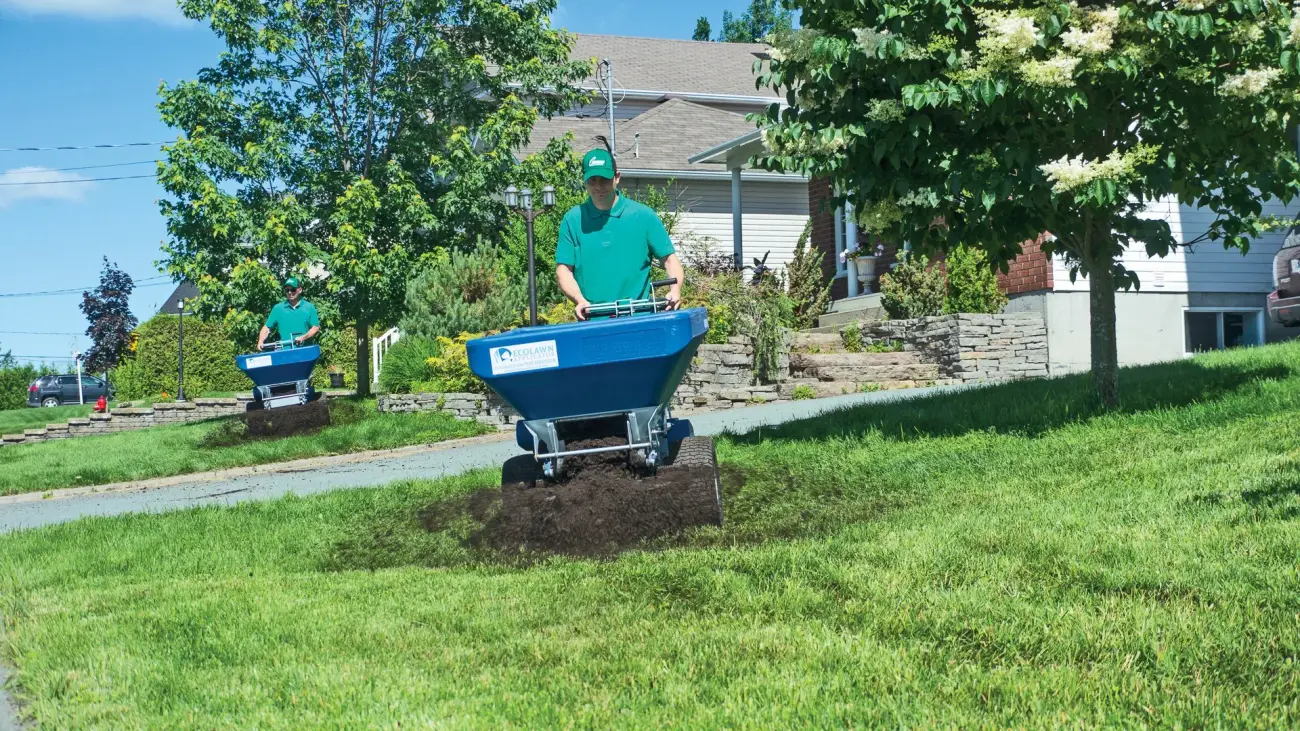
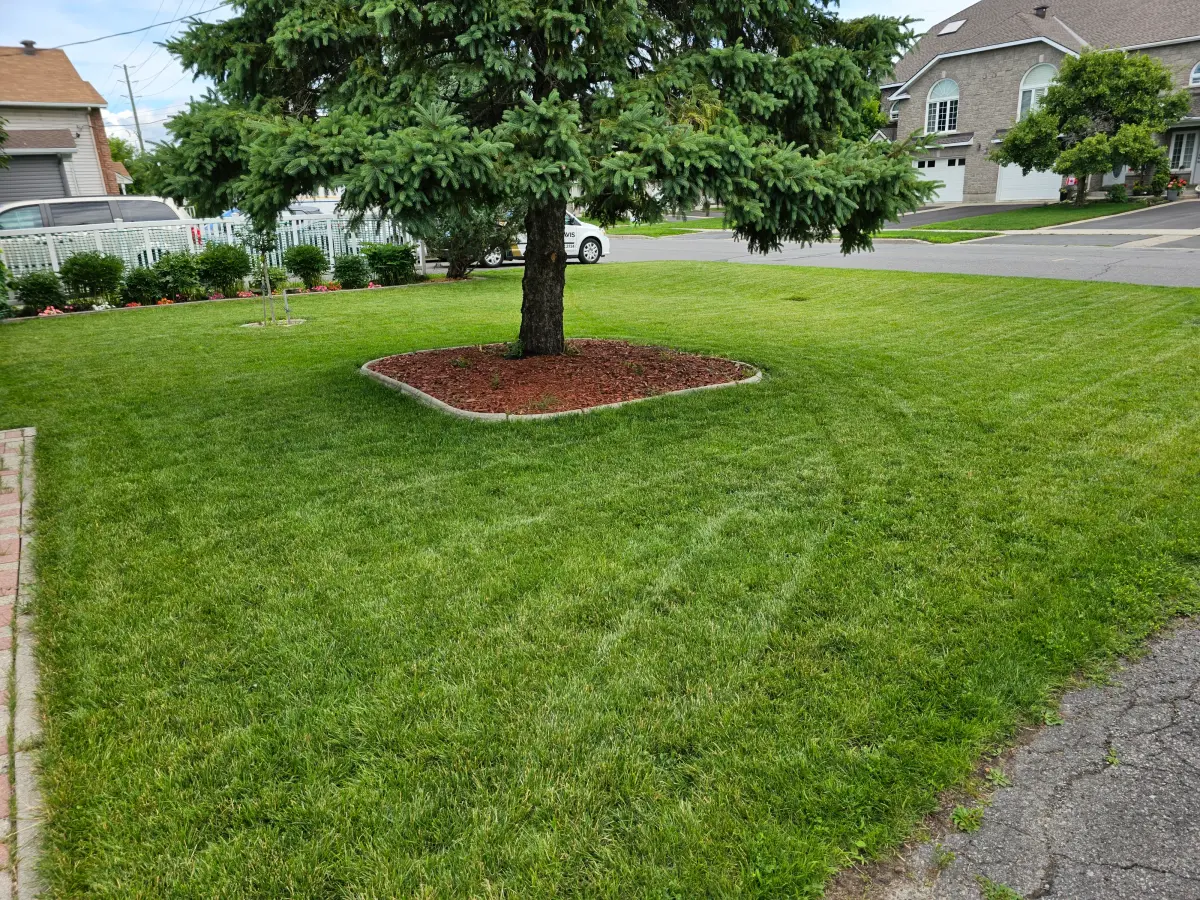
Most thin Ottawa lawns are a soil problem, not a seed problem.
Most failing Ottawa lawns are not short on seed. They are growing in compacted, depleted, or out-of-range soil. Seeding over that problem is how homeowners end up paying for seeding twice. Strengthening the soil first lets the grass you already have do what it is built to do. And if seeding is genuinely needed, it goes into ground that can actually support it.
Best used annually, spring or fall. It's the program behind every other program we run.
What we might apply — and what it does.
This is a sample of the amendment toolkit. What actually goes into your lawn is matched to the specific conditions we find on the day of the visit.
- Dehydrated pelletized compost
- Builds organic matter, improves water retention and microbial activity
- Seaweed (Ascophyllum nodosum)
- Natural growth stimulant, supports root development and stress tolerance
- Humic acid
- Enhances nutrient uptake and soil biology
- Wollastonite
- Locally-sourced Ontario calcium silicate mineral; silicon strengthens cell walls against disease and environmental stress
- Solu-Cal
- Fast-acting calcium to raise pH in acidic soils
- Mycorrhizal inoculant
- Conditioned onto the seed at mechanical seeding — establishes fungal root networks that expand water and nutrient access beyond the physical root zone
- Peat moss
- Moisture retention for bare or exposed seeding areas
- Weed-free topsoil
- Levels, fills, or improves areas with poor existing soil depth
Common questions.
Will this fix my lawn without seeding?
Often yes — that is the point of the program. If your lawn still has reasonable coverage, rebuilding the soil frequently lets the existing grass recover and thicken on its own. If the thinning is too far along, we will tell you that seeding is the next step. That is the Repair program, and the soil work already done counts toward it.
When should this be done?
Spring rejuvenates the lawn after winter; fall strengthens it before the freeze. It works best as an annual program — the foundation every strong lawn is built on, not a one-time rescue.
Is it safe for kids and pets?
Yes. The compost is weed-free with no animal by-products, and the program is chemical-free-first by design — organic inputs, mechanical aeration, and pH correction matched to your soil.
My lawn is dead along the driveway and sidewalk — road salt?
Very likely. Winter salt breaks down soil structure, blocks water penetration, and stresses roots with osmotic pressure — which is why the damage usually hugs pavement edges. Soluble calcium (Solu-Cal S / calcium sulfate) displaces the sodium and helps rebuild soil structure. It slots straight into the soil program when we find salt damage on site.
What does it cost?
Programs start from $160 +HST and scale with lawn size. The estimator gives you a range in about 60 seconds, and we confirm the exact price once your lawn size is verified with aerial measurement — no separate assessment visit needed.