Grubs eat the roots. Then animals dig up the turf to reach them.
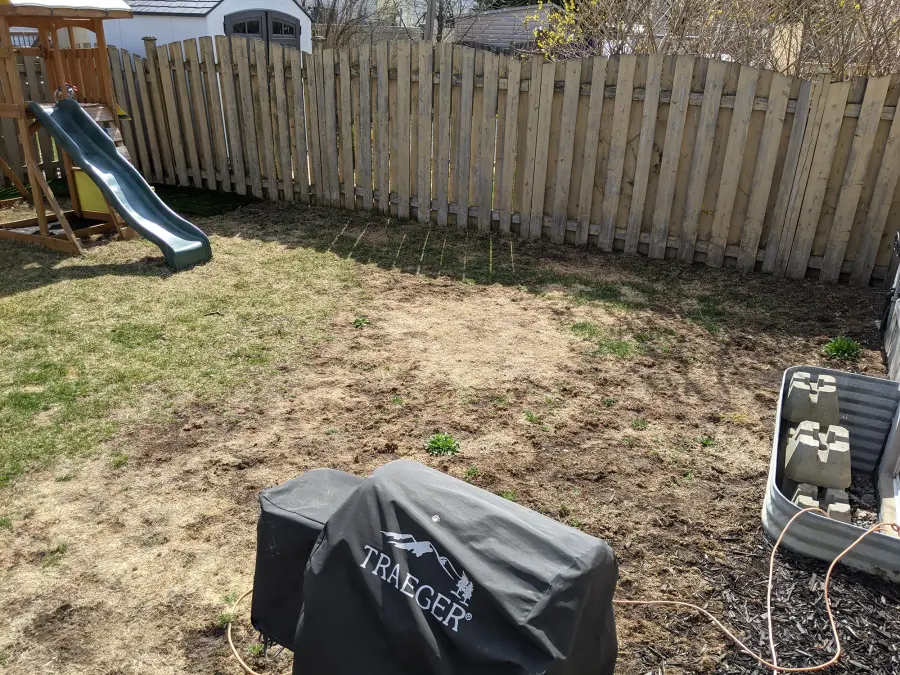
White grubs feed on grass roots below the surface. Skunks and raccoons then tear up the turf to feed on the grubs. With cosmetic pesticides banned in Ontario, the real work is recovery and building resilience.
Signs to look for.
- Brown patches that lift or peel back like loose carpet — the roots are gone
- Skunks, raccoons or birds suddenly digging and tearing at the lawn
- Spongy turf underfoot in late summer or fall
- Damage that spreads despite normal watering and care
None of these is proof on its own — chinch bugs, drought stress, and grub feeding imitate each other well. That is why our first step is never a treatment. We agree a preliminary plan first, then confirm what is actually happening under your turf on site.
Recovery is soil restoration plus precision seeding on the damaged areas — dense new turf placed into prepared soil and timed to the seeding windows.
Resilience is the long game. Deep-rooted grass on healthy soil tolerates grub feeding far better than stressed turf. Amendments like wollastonite (whose producer publishes research on grub-damage control) earn their place where the soil test supports them.
Common questions.
How do I know it's grubs and not something else?
You often don't — which is why we confirm it on arrival, before anything goes down. Chinch bug damage, drought stress, and grub damage can look alike from the porch. We check what is actually under the turf before recommending anything, because treating the wrong cause wastes time and money.
What can be done, with pesticides banned?
Two fronts.
Recovery: damaged areas are rebuilt with soil restoration and precision seeding — dense new turf placed into prepared soil.
Resilience: a healthy, deep-rooted lawn on good soil tolerates grub feeding far better than a stressed one.
There is no legal quick spray in Ontario.
I've heard wollastonite can help — true?
Its producer, Canadian Wollastonite, publishes research on wollastonite as a natural approach to grub damage — the silica strengthens plant cell walls. We carry it in the amendment toolkit and apply it where the soil test and what we find on the ground support it. Read their research and our wollastonite page, then ask us about it when we agree your plan.
When does grub damage show up?
Most visibly in late summer and fall, and again in spring — which is also when the animal digging is worst. If you're seeing it now, we can agree a plan now; recovery seeding is timed to the seeding windows.